


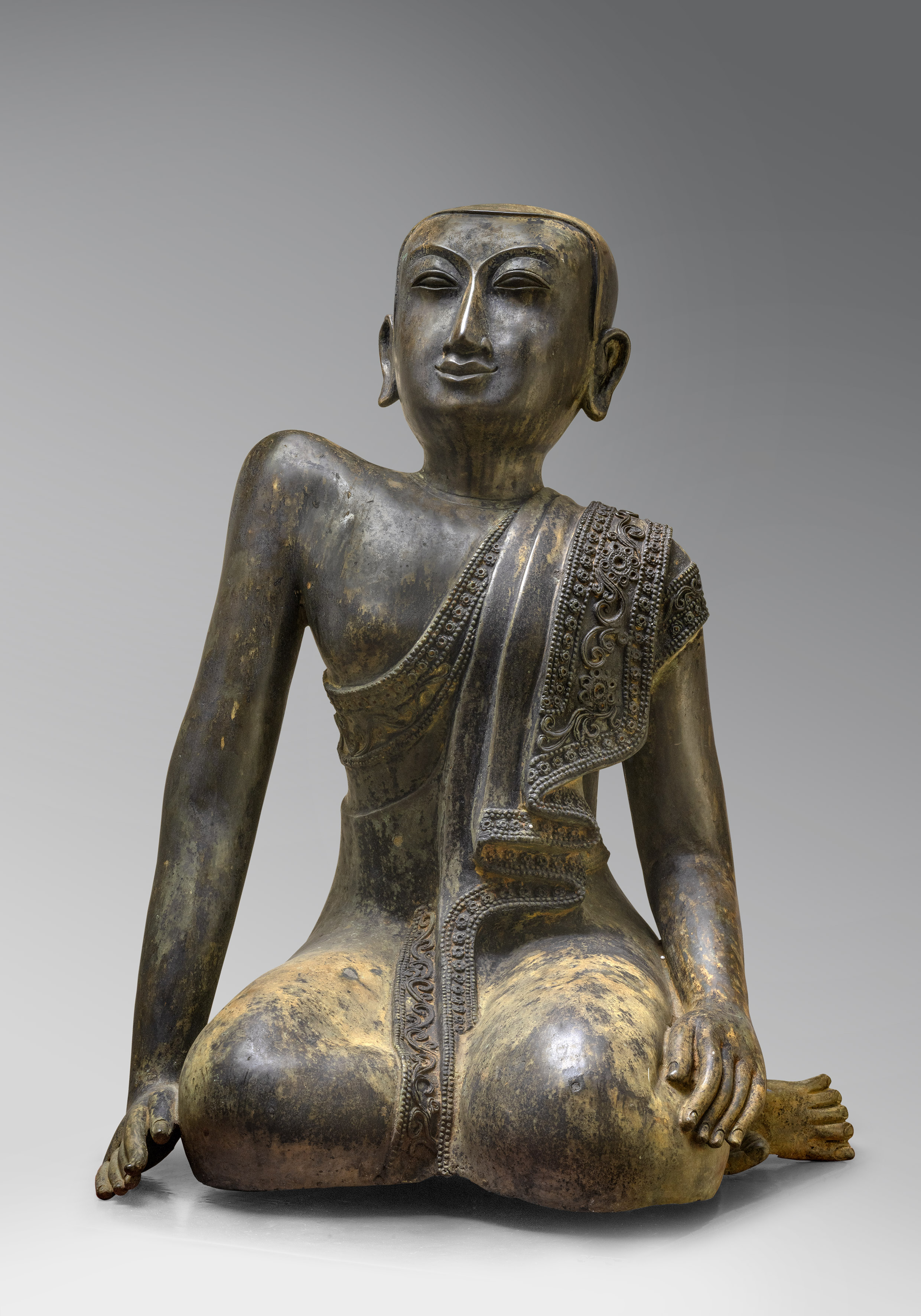
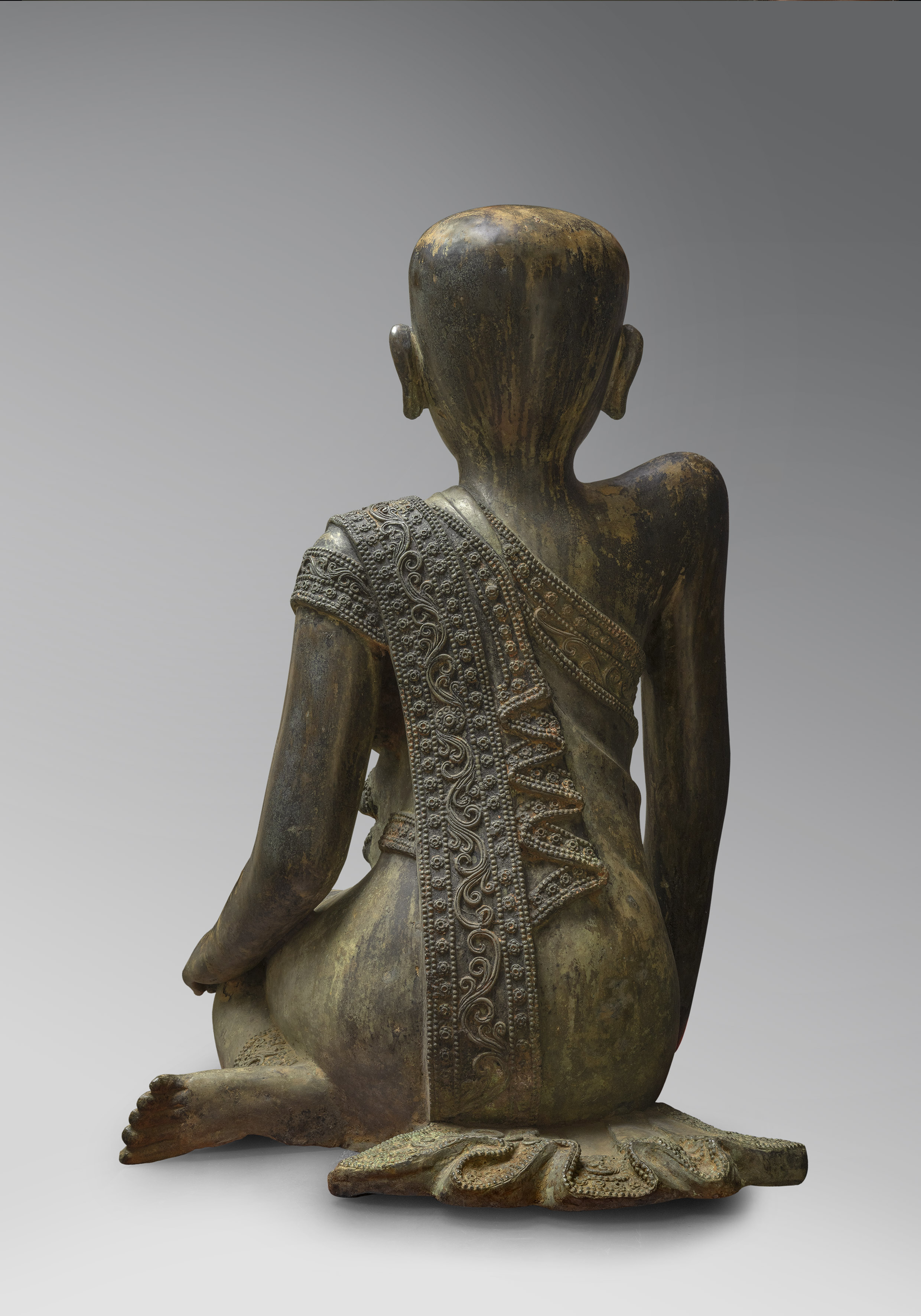
Mandalay Period, 19th Century
Bronze with a deep dark patina retaining traces of original gilding and lacquer, with areas of naturally worn gilding
H77xW53cm
SOLD
Provenance: From a Belgian collector P.D., who acquired the sculpture at Anna Antiques Bangkok since early 1980'ies
This impressive bronze sculpture represents probably Sariputta, one of the two foremost disciples of the Buddha, together with Mogallanna. He is always seated on the right side of the Buddha, with both knees bent to one side and hands gracefully resting upon the thighs. His head is inclined towards the left shoulder, as if listening to the Buddha. The pose conveys humility and calm devotion, emblematic of the deeply monastic character of Burmese Buddhist art during the 19th century. The cranial form is slightly elongated and the hairline is defined by a narrow band, both typical of late Konbaung-period (1752–1885) bronzes.
The figure wears a monastic robe finely adorned with elaborate repoussé borders of scrolling foliage and beaded ornamentation. These richly detailed borders, running along the edges of the garment and across the chest, demonstrate a sophisticated mastery of metalworking and an attention to decorative refinement that became more pronounced in 19th-century Burmese casting. Furthermore the border sweeps over the shoulder and extends almost the full length of the figure.
While the iconography and form are distinctly Burmese, several features hint at Chinese influence, reflecting the cross-cultural exchanges between Burma and southern China during the 18th–19th centuries. The form of the eyes, the oval facial shape, high cheekbones and the smooth, symmetrical modelling recall the elegance of late Ming and early Qing devotional bronzes.
What distinguishes this figure from the more common Mandalay-period disciples is its exceptional scale and, above all, the extraordinarily elaborate treatment of the monastic robe, whose densely worked ornamental borders give the sculpture an almost courtly richness while retaining the quiet devotional character of a monastic image.
Large devotional bronzes of this type were prestigious commissions, undertaken by wealthy donors in consultation with monks, artisans and craftsmen to ensure the spiritual and aesthetic success of the image. The making of such a statue was considered a profoundly meritorious act.
For a family, having a son enter the monastic order was a source of great honour, and during his ordination, generous donations were made to accrue the highest form of merit. The casting of a bronze image was accompanied by elaborate rituals and ceremonies, attended by the entire family and community. The success of the casting process held symbolic importance, imperfections during casting were considered inauspicious omens.


Privacy Document | Reset Cookieconsent
Website by Phobos & Actor